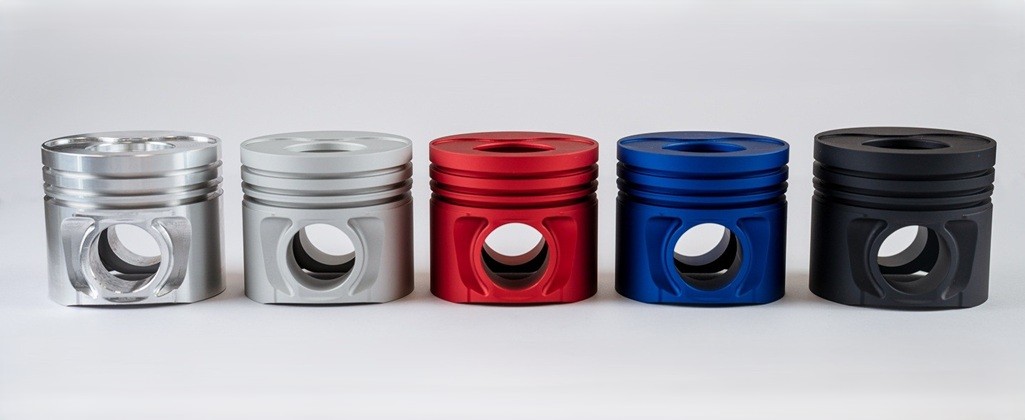
Anodizing is an electrochemical process that forms a layer of aluminum oxide on the surface of aluminum, and there are several types of this process, with soft anodizing (type II) and hard anodizing (type III) being the most notable. Each of these types has specific characteristics that make them suitable for different applications.
Soft anodizing – type II
Soft, or more commonly referred to as “regular” anodizing, is the process of applying an aluminum oxide layer with a thickness ranging from 2 to 25 micrometers. This layer is highly resistant to mechanical and physical wear and can easily take on colors, enhancing the aesthetic of the surface.
Soft anodizing is suitable for components that require high dimensional precision, as tolerances can be maintained. With proper pretreatment, threads and technical holes remain almost unchanged. Because of these characteristics, this type of anodizing is most commonly applied in industries such as medicine, dentistry, the production of components for the automotive industry and precise electronics.
Hard anodizing – type III
Hard anodizing, also known as Type III, is a process of anodic oxidation that results in a much thicker aluminum oxide layer, ranging from 15 to 150 micrometers. This process is performed in more aggressive chemical agents, making the final product extremely resistant to wear, impact and scratching.
Although hard anodizing is very durable and resistant, the greater thickness variation of the oxide layer can lead to deviations from the required dimensional tolerances, making it unsuitable for components that require high precision. Additionally, this type of anodizing typically causes changes in color shades, which are often darker than those achieved with soft anodizing.
Hard anodizing is most commonly used in industries where high resistance to mechanical damage is required, such as construction, agriculture, load-bearing profiles and large surface protection.
Conclusion
Each of these anodizing types has its own specific advantages and applications. Soft anodizing is better suited for precise and aesthetic applications, while hard anodizing is the choice for components requiring high resistance to mechanical impacts. Understanding the difference between these two processes helps in selecting the right option for specific individual needs.